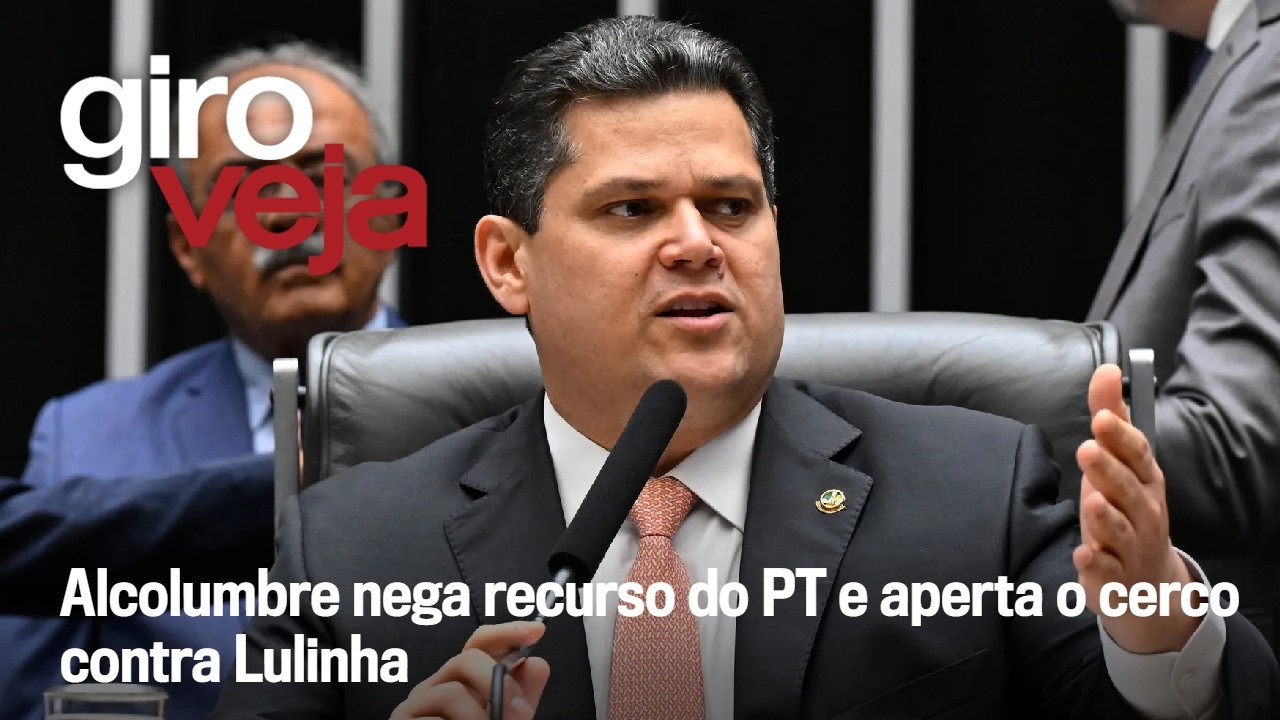
In a significant development echoing through Brazil's political and legal spheres, Senate President Davi Alcolumbre (União-AP) has confirmed and upheld the decision to break the banking and fiscal secrecy of Fábio Luís Lula da Silva, widely known as Lulinha. The son of President Luiz Inácio Lula da Silva, Lulinha, is a central figure in the ongoing Congressional Joint Inquiry Commission (CPMI) investigation into widespread fraud and irregularities within the National Social Security Institute (INSS).
The Mandate for Transparency: Alcolumbre's Pivotal Decision
Davi Alcolumbre's decision, announced this Tuesday, March 3rd, effectively rejected a plea to annul the CPMI's earlier resolution. This resolution, approved on February 26th, mandated the quebra sigilo lulinha, a crucial step in the commission's efforts to untangle a complex web of alleged fraudulent activities in the granting of social security benefits. Alcolumbre had previously indicated he would consult the Senate's legal counsel before making his definitive stance known, highlighting the weight and political sensitivity of the matter.
In a public statement during a plenary session, the Senator affirmed, "The alleged violation of the regimental norms is not evident and unequivocal." This declaration underscores the legitimacy of the CPMI's process and its adherence to established parliamentary procedures, dismissing claims of procedural missteps. By upholding the decision, Alcolumbre has reinforced the investigative powers of the CPMI, signaling a firm commitment to transparency and accountability, even when high-profile individuals are implicated.
This confirmation is more than a procedural rubber stamp; it represents a significant push forward for the INSS investigation. For many, it signifies that no individual, regardless of their family ties, is above scrutiny when public funds and the integrity of national institutions are at stake. The quebra sigilo lulinha allows investigators to delve deep into financial transactions and tax records, which are often the key to uncovering illicit financial flows and identifying beneficiaries of fraudulent schemes.
Unpacking the INSS Fraud Probe: Why Lulinha's Secrecy Was Broken
The core of the investigation lies in widespread allegations of fraud and irregularities in the concession of social security benefits, a scheme that has potentially defrauded millions of Brazilian retirees and pensioners. The CPMI do INSS was established to meticulously examine these claims, identify those responsible, and propose measures to prevent future abuses. Within this comprehensive inquiry, Lulinha's name emerged, prompting the commission to request the breaking of his financial secrecy.
The decision for the quebra sigilo lulinha was a direct result of compelling evidence presented by the rapporteur, Deputy Alfredo Gaspar (União/AL). This evidence included:
- Intercepted Messages: Messages extracted by the Federal Police (PF) from the cell phone of Antônio Carlos Camilo Antunes, infamously known as "Careca do INSS" – identified as the primary operator of the criminal scheme. These messages reportedly reference a payment of at least R$300,000 to "o filho do rapaz," a phrase investigators interpret as an allusion to Lulinha. This payment was allegedly directed to a company linked to Roberta Luchsinger.
- Suspicious Financial Repasses: Documents indicating financial transfers totaling R$1.5 million between companies allegedly linked to various investigated individuals. These transactions were purportedly justified as "consulting services" but lacked any clear economic backing or genuine service provision, raising red flags about their true nature and purpose.
Deputy Alfredo Gaspar emphasized that the breaking of banking and fiscal secrecy, along with access to the Financial Intelligence Report (RIF) for Fabio Luis Lula da Silva, were "technical imperatives" for the CPMI. These measures are critical for understanding the financial intricacies of the alleged scheme, tracking money trails, and establishing concrete connections between individuals and fraudulent activities. The investigation seeks to determine if Lulinha directly or indirectly benefited from, or was involved in, the illicit operations that have caused significant harm to the INSS and its beneficiaries.
The "Operation Sem Desconto" Connection
Lulinha's involvement isn't confined solely to the CPMI's direct findings. He is also cited in a Supreme Federal Court (STF) decision that authorized a new phase of "Operation Sem Desconto." This large-scale police and control operation, spearheaded by the Federal Police and the Comptroller General of the Union (CGU), investigates a national scheme of unauthorized associative discounts that has severely harmed millions of retirees and pensioners across Brazil. The alleged mechanism involved deducting unauthorized fees from pension benefits, often without the knowledge or consent of the beneficiaries.
The connection between Lulinha and "Operation Sem Desconto" through the intercepted messages from "Careca do INSS" provides a crucial link, suggesting potential involvement in broader criminal activities targeting social security funds. This dual mention in both the CPMI's specific investigation and the STF-authorized operation underscores the seriousness and multi-faceted nature of the allegations against him.
Implications and Next Steps: What the Sigilo Break Means
The confirmation of the quebra sigilo lulinha marks a pivotal moment in the INSS fraud probe. With access to Lulinha's comprehensive banking and fiscal records, including his Financial Intelligence Report (RIF), investigators will be able to:
- Trace Financial Flows: Identify the origin, destination, and purpose of financial transactions, including the alleged R$300,000 payment and the R$1.5 million in suspicious repasses.
- Verify Asset Declarations: Cross-reference declared assets with actual financial movements, potentially uncovering undisclosed wealth or discrepancies.
- Uncover Hidden Connections: Reveal links between Lulinha, the companies involved, and other individuals implicated in the INSS fraud scheme.
- Gather Concrete Evidence: Obtain tangible proof of financial activities that can substantiate or refute the allegations, moving beyond mere intercepted messages or circumstantial evidence.
This extensive access is not merely about Lulinha but is part of a broader investigative sweep. The CPMI has also approved the breaking of financial secrecy for numerous other individuals and companies suspected of operating within the fraudulent scheme. Additionally, new witnesses are being summoned to testify, indicating a comprehensive approach to dismantling the entire criminal network. The goal is to piece together a complete picture of how the fraud operated, who benefited, and how to prevent future occurrences.
For more detailed insights into the specific financial allegations and the R$300,000 payment, you can read Lulinha's Finances Probed: R$300k Payment in INSS Scheme. To understand the broader scope of the CPMI's investigation and its methods, delve into CPMI Quebra Sigilo Lulinha: What the INSS Investigation Reveals.
Lulinha's Defense Responds
In response to the escalating investigation and the media attention, Lulinha's defense has consistently maintained his innocence. In a note released prior to Alcolumbre's decision, his lawyers stated that their client has "no relation with the frauds against the beneficiaries of the INSS," asserting that he "has not participated in diversions nor received any amounts from criminal sources."
Lulinha's legal team has also expressed concerns about what they describe as an "incessant media campaign reproducing partial and confidential data of an ongoing investigation." To counter this, they have formally requested access to the full investigation records from the Supreme Federal Court. Lulinha has, through his lawyer Guilherme Suguimori Santos, publicly offered to provide any necessary clarifications to the Supreme Court once his defense is granted full access to the case files. This move signals a commitment to due process while also attempting to manage the public perception of the allegations.
The Broader Context of Public Transparency
The investigation into the INSS fraud, and specifically the quebra sigilo lulinha, highlights the critical role of parliamentary inquiry commissions (CPMI) in Brazil's democratic framework. These bodies serve as powerful tools for oversight, allowing legislators to investigate matters of public interest, particularly when there are allegations of corruption or mismanagement that state institutions may struggle to address independently or with sufficient public transparency.
The principle of banking and fiscal secrecy (sigilo bancário e fiscal) is a fundamental right protecting an individual's financial privacy. However, in cases of suspected criminal activity, particularly those involving public funds and widespread fraud, legal frameworks allow for the temporary suspension of this secrecy through judicial or parliamentary mandates. This balance between individual privacy and public interest in combating crime is a cornerstone of modern legal systems. The decision to break such secrecy is never taken lightly and requires substantial justification, which, in this case, the CPMI has evidently provided and Alcolumbre has upheld.
Such high-profile investigations, particularly when they involve the family members of sitting presidents, invariably attract intense scrutiny. They test the resilience of democratic institutions and their capacity to ensure justice without political interference. For citizens, these probes are vital for reinforcing trust in the system, demonstrating that accountability applies to all, and that those who defraud public social security funds will be pursued vigorously.
Conclusion
Davi Alcolumbre's confirmation of the quebra sigilo lulinha represents a pivotal advancement in the INSS fraud investigation. It grants the CPMI do INSS critical access to Fábio Luís Lula da Silva's financial and fiscal records, a measure deemed essential for unraveling the complex web of irregularities that have plagued Brazil's social security system. While Lulinha's defense maintains his innocence and seeks full access to the investigation, the commission is now empowered to pursue a deeper understanding of the alleged financial flows and connections. This decision underscores Brazil's commitment to transparency and accountability, ensuring that the pursuit of justice for millions of affected retirees and pensioners remains the paramount objective. The investigation continues, promising further developments as the CPMI endeavors to bring clarity and resolution to one of the nation's most impactful fraud cases.